Smoking alternatives fall into four groups: licensed Nicotine Replacement Therapy (NRT) products, nicotine-containing e-cigarettes (vapes), nicotine-free stop smoking tablets prescribed by your GP or local Stop Smoking Service, and a range of simple changes to help manage routine situations where you would normally light up. Each of these alternatives is described below, with what the NHS says about each to help you choose.
Why a smoking alternative helps
Most of the damage caused by cigarettes comes from burning tobacco rather than from nicotine. As the NHS guide to finding the best stop smoking products explains, "nicotine on its own doesn't cause cancer, lung disease, heart disease or stroke. It's the other chemicals in cigarettes that cause most of the damage."
While nicotine is what keeps drawing you back for more, once you have stopped smoking, the abrupt cessation can cause cravings, along with feelings of irritation and restlessness. Our nicotine withdrawal guide outlines the full range of effects in more detail. When looking for an alternative to smoking, any method will aim to combat the hold of nicotine while you try to break the smoking habit itself, either by supplying nicotine in a cleaner form or by blocking its effects.
Alternatives to smoking at a glance
| Alternative | Contains nicotine? | Where to get it | NHS position |
|---|---|---|---|
| Nicotine replacement therapy | Yes | Pharmacies, supermarkets, online, GP or Stop Smoking Service | Licensed medicine, the most widely used stop smoking product |
| Vaping (e-cigarettes) | Usually | Vape shops, some Stop Smoking Services offer a free starter pack | Less harmful than smoking, not risk-free, adult smokers only |
| Varenicline and cytisine | No | GP or local Stop Smoking Service | Effective nicotine-free medicines |
| Stop Smoking Service | Not applicable | Free through the NHS | Expert support, can be combined with any of the above |
| Behaviour swaps | No | Free | Part of the NHS plan for handling triggers |
Nicotine replacement therapy: seven alternatives to cigarettes
NRT (Nicotine Replacement Therapy) is the most well known of all the cigarette alternatives. The NHS guide to NRT says the products "give your body lower amounts of nicotine, but without the dangerous chemicals in cigarettes" and calls them "the most widely used and well-established stop smoking products". All the different forms of NRT relieve cravings and symptoms of withdrawal when you are stopping or cutting down. They work at different speeds and can be used at different times during the day.
Nicotine patches
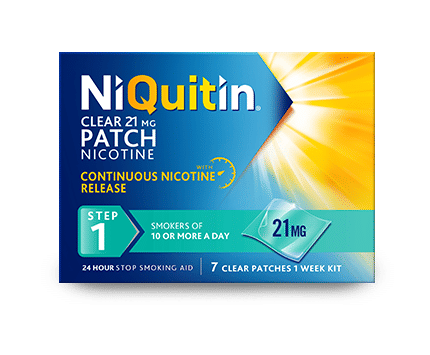
Nicotine patches are slow release, and you stick one on each morning. Nicorette InvisiPatch is worn for 16 hours whilst you are awake. NiQuitin Clear and Nicotinell patches are worn for 24 hours, meaning they also help with that first craving of the waking day. The dosage of all these brands is gradually reduced over a few months.
Nicotine gum
Chewing nicotine gum is suitable for those that require something to do with their mouth. It is chewed slowly and then placed in the cheek to rest. There are two versions of nicotine gum available to buy in the UK, 2mg Nicorette gum and 2mg and 4mg Nicotinell gum. Find out more about nicotine gum and how to use it in our how to use nicotine gum guide.
Nicotine lozenges
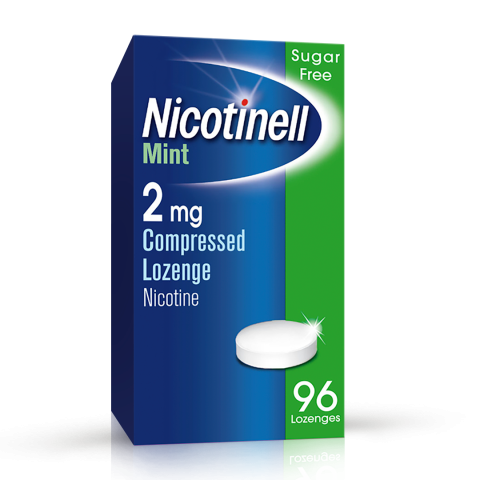
Lozenges dissolve slowly in the mouth and don't have to be chewed or thrown away. Nicotine lozenges are made by several manufacturers including Nicorette, NiQuitin and Nicotinell. Lozenges are supplied in a range of strengths, from 1mg to 4mg. More information on lozenges and gum is available on nicotine gum or lozenges.
Mouth spray
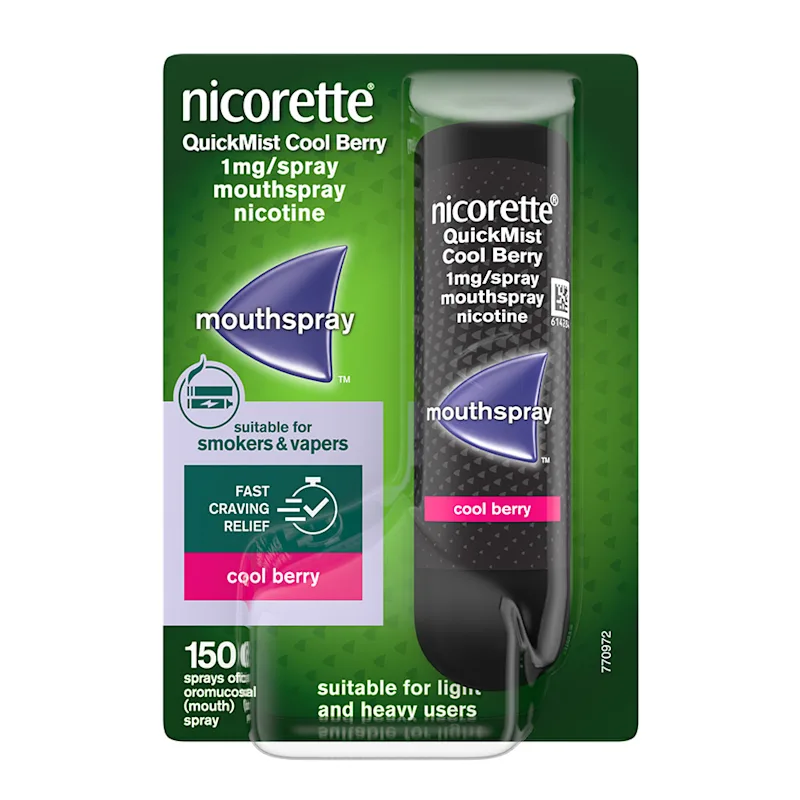
A nicotine mouth spray like Nicorette QuickMist or Nicotinell 1mg oral spray is for occasional use when you have a craving. A mouth spray is very fast acting, as described by the NHS, and is one of the products mentioned in the NHS's combination products advice, along with a nicotine patch.
Nasal spray
Nicorette Nasal Spray is an NRT product that contains nicotine which is absorbed through the lining of the nose. It is the fastest way that nicotine can enter the bloodstream according to the NHS. This form of NRT mimics the rush of a cigarette more than others.
Inhalator
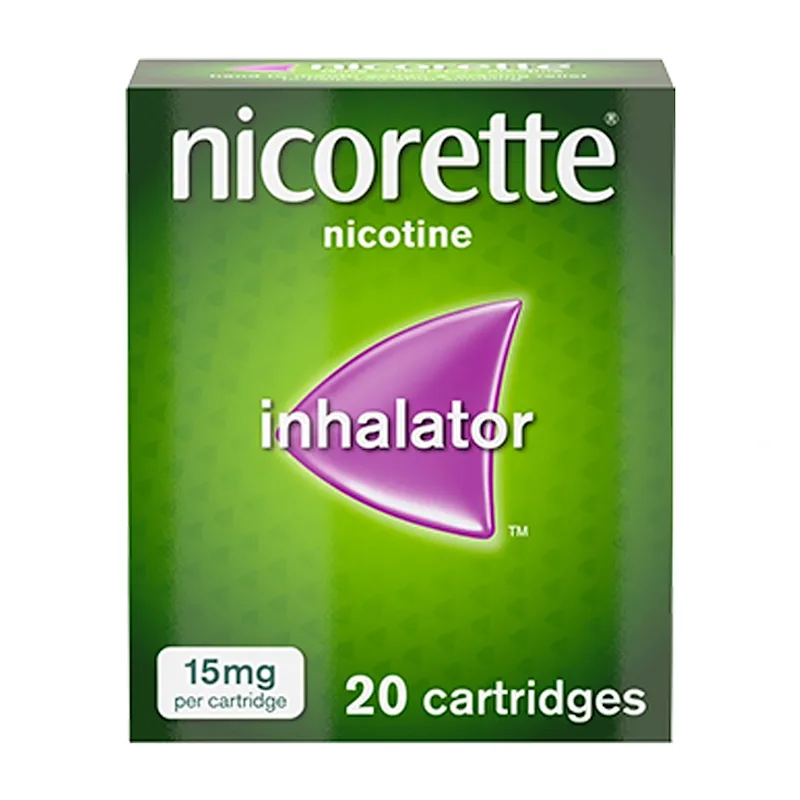
The Nicorette Inhalator is a simple plastic mouthpiece which holds a 15mg cartridge of nicotine. According to the NHS, it mimics the 'hand-to-mouth' habit of smoking, which makes it a natural pick if holding a cigarette is the part you miss most.
Microtabs
Nicorette Microtabs are 2mg tablets that dissolve under the tongue. The Microtabs are so small that nobody will notice them. Unlike gum, there is no chewing and no-one will ever know you are using them.
You don't have to choose between products. NHS guidance is to use a fast-acting nicotine product (such as a mouth spray) combined with a slow release product (such as nicotine patches). We recommend you read both leaflets before deciding how to combine your products. Note that some fast-acting products have a daily limit and the strength of products can vary between brands, with some based on number of cigarettes smoked per day and others on how soon after waking you smoke your first cigarette. See pack or use our nicotine strength guide to find out.
Vaping (e-cigarettes)
Vaping is one of the most popular alternatives to smoking in the UK. The liquid in an e-cigarette is heated to produce an aerosol which typically contains nicotine. The NHS page on using e-cigarettes to stop smoking states that "e-cigarettes do not burn tobacco and do not produce tar or carbon monoxide, 2 of the most damaging elements in tobacco smoke" and that they are "likely to be far less harmful than cigarettes and can help you quit smoking for good".
This page outlines the limits of vaping. Vaping is 'not completely risk-free', the 'long-term risks of vaping are not yet clear' and e-cigarettes 'are not recommended for non-smokers'. The NHS Better Health's vaping to quit smoking page states that 'non-smokers and young people under 18 should not take up vaping'.
Vapes are not licensed medicines so are not available on prescription. However, the NHS states that local Stop Smoking Services may offer a free vaping starter pack. Note that Unlit does not sell vapes. If you are currently using vapes and are looking to stop using nicotine completely, then see how to stop vaping for a full guide on how to stop.
Vaping vs smoking: is vaping better than smoking?
The NHS advice for adult smokers is yes, but with conditions. Better Health states that 'evidence shows that vaping is less harmful than smoking' and quotes the 2022 UK evidence review which states that in the short and medium term 'vaping poses a small fraction of the risks of smoking'.
The same page says: "You're roughly twice as likely to quit smoking if you use a nicotine vape compared with other nicotine replacement products, like patches or gum." The full benefit of stopping smoking is also reported to occur only when all cigarette smoking has ceased. As the NHS puts it, "The healthiest option is not to smoke or vape." For a non-smoker, vaping is not an alternative to anything, just a new habit to avoid.
Stop smoking tablets: varenicline and cytisine
There are alternatives to smoking which do not contain nicotine at all. The NHS page on quitting with nicotine-free medicines lists the following three nicotine-free medicines to help people quit smoking: varenicline (previously sold under the name of Champix) and cytisine as well as bupropion (Zyban). Varenicline and cytisine work by blocking nicotine's effects in the brain, making smoking less rewarding and helping reduce cravings.
All these are available on prescription from your GP or local Stop Smoking Service. They will check that the prescribed product is suitable for you. The NHS states that varenicline is "now available again in the UK, along with a new option called cytisine. Both are effective ways to help you quit smoking for good." The NHS also says combining a nicotine-free medicine with NRT gives you the best chance of quitting for good. We do not sell any of these medicines and this information is for guidance only.
Free NHS stop smoking services
Support is another alternative, and it's free. "With professional or expert help, you're 3 times more likely to quit for good" says NHS Better Health. Your local stop smoking adviser can help you choose between NRT and prescription medicines, support you if you switch to a vape and test your carbon monoxide level as you go.
You can find your local Stop Smoking Service on the NHS website and call the Smokefree National Helpline for free on 0300 123 1044. The NHS stop smoking services page has the helpline numbers for Scotland, Wales and Northern Ireland.
Things to do instead of smoking
Whilst nicotine-containing products deal with the nicotine in tobacco, stopping the habit of smoking often requires a different approach. Smoking is often linked with activities such as drinking coffee, taking breaks, driving home and the end of meals. The NHS webpage on smoking triggers and cravings states that cravings usually last only a few minutes and are at their most challenging in the first 28 days of giving up. The following are some suggestions for dealing with the challenges posed by smoking cravings from the NHS webpage:
- Take your work break at a different time, take a walk instead of a smoke break.
- If coffee and a cigarette are part of your morning ritual, try replacing the coffee with juice for a while.
- Rather than reaching for a cigarette after meals, use minty gum or brush your teeth.
- Avoid alcoholic drinks when you're out, especially for the first 28 days. Opt for non-alcoholic alternatives.
- Use a fidget spinner, play a quick game or do a few push-ups when a craving hits.
- Try the NHS 4-5-6 breathing exercise, inhale through your nose for a count of 4, hold your breath for a count of 5 and then exhale through your mouth for a count of 6.
- Changing your route to work or even the music you listen to on the way can help to refocus your mind when the normal journey triggers a desire to smoke.
- Get a quit buddy. Throw away your cigarettes, lighters and ashtrays.
If hand-to-mouth is the hardest part of your smoking habit to give up, then a fast acting quit smoking aid such as an inhalator or a quick-acting gum can be used whilst you give up the rest of your smoking habits. See our quit smoking timeline to see the changes that take place in your body in the weeks following your date of quitting.
What about nicotine pouches?
Nicotine pouches are marketed as a 'smokeless alternative' but are not medicines. NHS advice states that 'Nicotine pouches are not licensed stop smoking products in the UK' and states that there is not enough data on the safety and efficacy of nicotine pouches to help people stop smoking. NHS advice is that "it is best to try one of the proven, licensed NRTs" if you want help to quit smoking.
Which smoking alternative should you try?
Start with what you feel you are missing most from your smoking ritual. The patch deals with the background level of nicotine and the spray or lozenge deals with the sudden urges as they arise. If it is the ritual of smoking that you feel you are missing then the inhalator or a behaviour swap could be the answer to this. Many people use more than one type of quit aid and a pharmacist or Stop Smoking adviser can help you combine different products. Our 'help me choose' tool will ask for two bits of information and suggest a starting point. There is also a full list of all licensed stop smoking products on our stop smoking aids page.
Questions people ask
What is the best alternative to smoking?
There's no one size fits all. Some people find a patch and a quick-acting spray gives them the help they need, while others use an NRT product and a nicotine-free medicine, both combinations the NHS suggests. The NHS also says that with professional or expert help, such as a Stop Smoking Service, you're 3 times more likely to quit for good.
Is vaping better than smoking?
While e-cigarettes are described by the NHS as less harmful than smoking, because they do not produce tar or carbon monoxide, e-cigarettes are not without risk and are not intended for use by non-smokers, children and young people.
Are there smoking alternatives without nicotine?
Yes. The prescription-only medications varenicline, cytisine and bupropion contain no nicotine. These can be prescribed by your GP or local Stop Smoking Service. Additionally, there are some nicotine-free ways of changing your behaviour instead. For example, rather than taking cigarette breaks, go for a walk instead.
Can I get NRT for free?
The NHS says NRT may be prescribed by your GP or local free Stop Smoking Service. NRT products are available from pharmacies, from some supermarkets and from retailers such as us online.
Can I use NRT while pregnant?
The NHS says NRT products are licensed stop smoking products which are safe to use during pregnancy if needed to give up smoking. These products should be discussed with a healthcare professional to choose the appropriate product for use in pregnancy.
Related guides
- Nicotine replacement therapy (NRT) explained
- How to stop vaping
- Nicotine strength guide
- Nicotine withdrawal